
Napping the Right Way to Stay Alert All Afternoon
Waking from a nap feeling more tired than before is very common. The culprits are how long you sleep and the time of day you choose.
But · 4 min read · Sep 5, 2026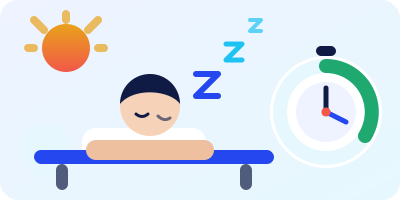
That foggy feeling in the early afternoon is not because you are lazy. The human body clock has a natural dip after lunch, when alertness falls away. A short nap taken properly helps you get through that dip and improves memory and mood.
How long is right
About 10 to 30 minutes is the length recommended for most people. Within that window you only pass through light sleep, so you wake gently and are alert again almost immediately.
Sleep longer and the body enters deep sleep. Woken in the middle of it, you fall into a heavy-headed, sluggish state that can last an hour — which is what makes many people wrongly conclude that napping does not suit them.
The best time of day
The best window is early afternoon, usually from after lunch until around three o'clock. Napping later eats into the sleep pressure you build up for the evening, making it harder to fall asleep at night.
A few small tips to make a nap more effective:
- Set an alarm before you lie down; do not let the nap simply drift on
- Lie down or recline somewhere cool, dark and quiet, using an eye mask if needed
- Do not slump face down on your arms at a desk — this position compresses your wrists, neck, shoulders and eyes
- Get up and move gently, wash your face and step into the light as soon as you wake
Who should not nap
People struggling with insomnia at night should skip the nap for now. Daytime sleep reduces sleep pressure and makes the evening even harder, creating a vicious circle.
People who often wake in the middle of the night, and those who have just been treated for insomnia with a behavioural programme, are also usually advised to limit daytime sleep.
When to see a doctor
Excessive daytime sleepiness is not always harmless. See a doctor if you drop off to sleep even while talking, eating or driving; if you snore loudly with pauses in breathing that your family has witnessed; or if you sleep enough hours at night and are still exhausted every day.
That may be a sign of sleep apnoea, anaemia, thyroid disease or a side effect of medication — all of which can be identified and treated. If the sleepiness comes on suddenly along with a severe headache, confusion or weakness on one side of the body, go to a medical facility immediately.
This information is for general reference only and does not replace advice from your doctor.