Sitting Too Much Has Its Own Harms, Even If You Exercise Regularly
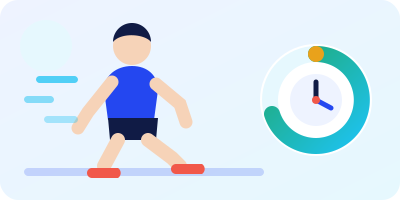
A 30-minute workout in the morning does not undo the 10 hours of sitting that follow. The two affect your body in different ways.
But · 4 min read · Sep 5, 2026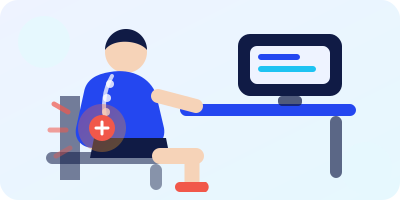
Many people reassure themselves that because they walk or go to the gym regularly, it does not matter how long they sit for the rest of the day. In fact, the total time spent sitting still is a separate factor, one that has an effect of its own regardless of whether you exercise.
The reason is that the large muscles in your legs and buttocks all but shut down when you sit. When muscles are not contracting, the use of sugar and fat in the blood slows down, blood returns to the heart less well, and the spine carries a sustained load in one fixed position.
How the body responds to long spells of sitting
- The leg and buttock muscles do little work and the metabolism slows
- Blood pools in the legs, leading to heavy legs and mild swelling by the end of the day
- The hip flexors shorten, and the back and neck muscles tire from holding one position too long
- Sitting hunched for a long time makes your breathing shallower
How to break up long spells of sitting
What matters is not cutting out sitting at all costs, but breaking long stretches of sitting into shorter ones.
- Every 30–60 minutes, get up and move around for a few minutes
- Stand while you are on the phone, and walk for short catch-up meetings
- Drink from a small glass so that you have to stand up to refill it
- Take the stairs rather than the lift when you can
- A few movements on the spot: rise onto your toes, roll your shoulders, open out your chest, stretch your legs
Where you sit matters too
Sit with your back against the chair, both feet flat on the floor, and the screen at eye level so your neck is not bent. No position is perfect if you hold it too long — the best posture is still the next one.
When to see a doctor
See a doctor if back pain or neck pain lasts more than a few weeks or keeps getting worse; if you have numbness, weakness in your arms or legs, or pain spreading down a leg; if one leg is swollen and hot, or your calf hurts after a long journey or a period spent mostly lying down; or if you feel short of breath or have chest pain.
People with vein disease, those who have just had surgery and those who are pregnant should ask their doctor how best to arrange their sitting and activity.
This information is for general reference only and does not replace advice from your doctor.